Market Spotlight: Huntsville, Alabama
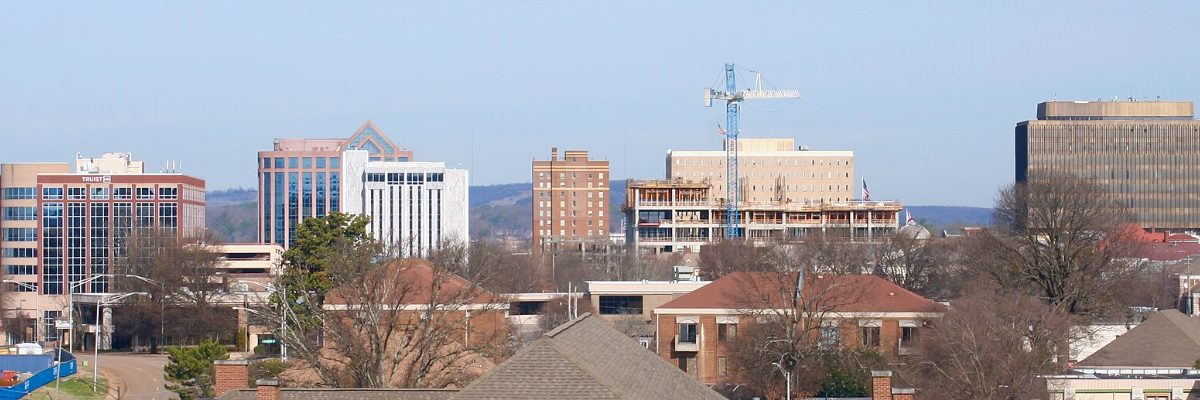

Market spotlights look at one market that stands out on the numbers — not a "buy here now" call, just a look at what the current data actually shows, drawbacks included. This one: Huntsville, Alabama, a Tennessee Valley metro where population and job growth are running well ahead of the national pace, even as home-price momentum has quietly flattened over the past year.
Why Huntsville
Huntsville has been one of the fastest-growing metro areas in the country for several years running, and 2025 Census estimates show that didn't let up: the metro added roughly 14,000 residents in a single year. Madison County, its core, has added more than 45,000 residents since 2020, and neighboring Limestone County posted the fastest growth rate of any county in Alabama in the latest estimate, at 3.3%. Growth has spread beyond the city itself into the surrounding counties — a sign of a broadening metro economy rather than a single hot neighborhood.
The jobs numbers back it up. Bureau of Labor Statistics data put Huntsville's nonfarm payroll employment up 1.8% year over year as of August 2026, with unemployment at a low 3.0% — a notably stronger reading than several larger metros posted over the same period. The anchor is defense and aerospace: Redstone Arsenal and NASA's Marshall Space Flight Center sit at the center of a cluster that regional economic development estimates put at more than 70,000 jobs and roughly $36 billion a year in economic impact, and the planned relocation of U.S. Space Command's headquarters is expected to add about 1,400 federal positions over the next five years.
| Median sale price | $339,775 |
| Price growth, year over year | -1.0% |
| Price vs. national median ($398,596) | ~15% lower |
| Median days on market | 79 days |
| New listings, year over year | +9.0% |
| Single-family asking rent | $1,789/mo |
| Rent growth, year over year | +2.9% |
Unfamiliar with a term in this table? The glossary defines median sale price, days on market, sale-to-list ratio, ZORI and the rest of the market-data vocabulary used here, and says which measure each figure uses.
The rent figure is Zillow's single-family series, which covers single-unit homes only and excludes apartment buildings; it measures asking rent rather than signed leases, and it is a metro-wide figure, so a specific neighborhood will run its own number. Pull an actual comp set before underwriting a real deal; our guide to finding reliable numbers covers how.
What makes the snapshot notable is the mismatch: a metro still adding population and jobs at this pace would typically show tight inventory and rising prices, not the reverse. Instead, new listings are up 9.0% year over year, while the median sale price dipped slightly. That combination of strong underlying demand drivers with a cooling, more balanced price trend is the specific reason this market stood out, rather than the population and jobs numbers alone.
The catch: concentration and weather costs
Huntsville's growth engine is also its biggest single risk. A local economy this dependent on one employer base — the U.S. Army at Redstone Arsenal, NASA, and the federal contractors built around them — rises and falls with federal budget decisions rather than the broader private economy. Government shutdowns and continuing-resolution gridlock have hit the local economy before, and a future round of defense-budget tightening would land here harder than in a metro with a more diversified job base.
Separately, Alabama's exposure to severe convective storms keeps statewide homeowners insurance costs above the national average, though by less than quote-comparison sites suggest. On the regulators' own figures — NAIC average premiums, 2022 data — Alabama averaged $1,748 against a national $1,569, about 11% higher and thirteenth among the states. Quote-based surveys that price a fixed coverage level put the gap wider, between roughly 14% and 29% depending on the assumptions, because a standardized quote carries more coverage than the average policy actually in force. Within the state, Huntsville runs below the Alabama average on both families of data — the coastal counties are what pull it up — so the inland position helps here. None of which substitutes for a quote on the specific house.