Market Spotlight: The Piedmont Triad, North Carolina
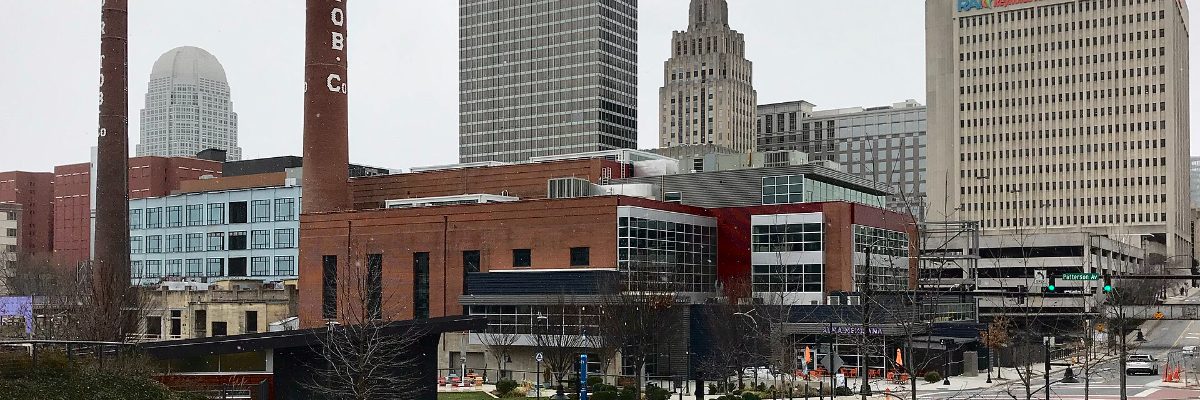

Market spotlights look at one market that stands out on the numbers — not a "buy here now" call, just a look at what the current data actually shows, drawbacks included. This one: the Piedmont Triad — Greensboro and Winston-Salem, two adjacent North Carolina metros with enough in common to look at together, where the property tax treatment is unusually clean for an investor and the main hazard is a revaluation that has already happened but has not yet reached a tax bill.
Why the Triad
Both metros are growing and, unlike several markets in this series, both are adding jobs. Greensboro-High Point gained 6,400 people in the year to July 2025, a 0.80% increase, with payrolls up 0.9% year over year as of August 2026. Winston-Salem gained 6,869, or 0.97%, with payrolls up 1.3% and unemployment at 3.8%. Entry prices sit close together, around $289,808 in Greensboro and $287,810 in Winston-Salem, and both markets are absorbing inventory at a similar pace — roughly 57 to 60 days on market at about 98% of list.
The two cities do not move in lockstep, which is worth stating rather than smoothing over. Single-family asking rents are up 4.3% year over year in Greensboro against 3.6% in Winston-Salem — both rising, and both among the stronger readings in this series, but Winston-Salem carries the higher rent in absolute terms at $1,840 against $1,799. Anyone underwriting "the Triad" as one market with one rent figure is averaging away a real difference in both level and direction. Inventory is building in both, up 22.0% and 23.3% respectively.
On the demand side, the Toyota battery plant in Randolph County is the real item — $13.9 billion invested and 5,100 jobs committed, with something over 1,200 people actually on payroll as of its opening in late 2025. That is a genuine demand driver at roughly a quarter of its committed scale, which is how it should be modeled. Boom Supersonic's Greensboro operation, by contrast, has 1,761 jobs committed but no aircraft expected until 2029 and public reporting through early 2026 describing a largely unused facility; it is not currently a housing-demand factor and should not be counted as one.
| Median sale price, Greensboro | $289,808 |
| Median sale price, Winston-Salem | $287,810 |
| Price growth, year over year | 0.0% / +0.6% |
| Median days on market | 57 / 60 days |
| Payroll employment, year over year | +0.9% / +1.3% |
| Single-family asking rent | $1,799 / $1,840 |
| Rent growth, year over year | +4.3% / +3.6% |
| Active listings, year over year | +22.0% / +23.3% |
Unfamiliar with a term in this table? The glossary defines median sale price, days on market, sale-to-list ratio, ZORI and the rest of the market-data vocabulary used here, and says which measure each figure uses.
The rent figure is Zillow's single-family series, which covers single-unit homes only and excludes apartment buildings; it measures asking rent rather than signed leases, and it is a metro-wide figure, so a specific neighborhood will run its own number. Pull an actual comp set before underwriting a real deal; our guide to finding reliable numbers covers how.
The catch: a 40% revaluation that lands in the 2027 bill
First, the good news, because it is genuinely useful and rarer than you would think. North Carolina assesses all real property at a single uniform standard of true market value, with no residential class ratio and no owner-occupancy differential. The state's relief provisions are narrow and status-based — elderly, disabled, veteran — rather than a general homestead cap. In plain terms: the headline rate is the rate you actually pay, and your rental is taxed on the same basis as the owner-occupied house next door. That is not true in Georgia, South Carolina, Florida, Texas, Oklahoma or Iowa, all of which treat an investor worse than an owner-occupant through one mechanism or another.
The catch is timing, and it is specific to Guilford County, which contains Greensboro. North Carolina counties revalue on multi-year cycles rather than annually, so tax bills move in steps. Guilford completed a revaluation with values effective January 2026, with an expected average increase in the region of 40 to 45%. A reappraisal moratorium enacted in June 2026 as Session Law 2026-8, and amended in July by Senate Bill 474 to adjust which counties it covers, requires affected counties — Guilford among them — to bill the 2026 tax year on the previous schedule of values and to apply the new schedule only from 2027 forward. The practical consequence for a buyer today: the tax bill you can see is computed on 2022 values, and the step-up arrives in the 2027 bill. Underwriting off the current bill understates the carrying cost of a Guilford County rental by a wide margin.
Forsyth County, containing Winston-Salem, is on a four-year cycle and already revalued effective January 2025, so a Winston-Salem buyer has largely absorbed that adjustment rather than facing it. That difference between the two counties is the single most consequential thing on this page, and it is the reason the tax section of a Triad pro forma cannot be written once and applied to both.