Market Spotlight: Albuquerque, New Mexico
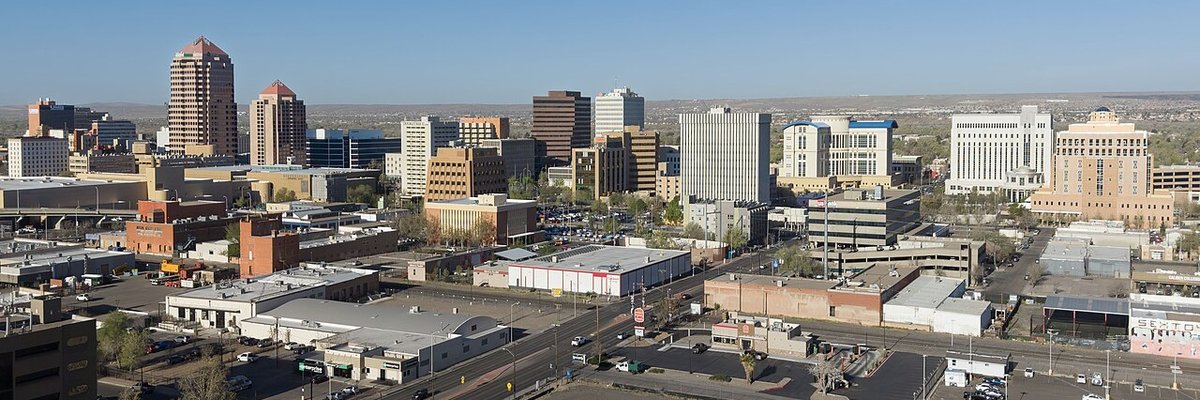

Market spotlights look at one market that stands out on the numbers — not a “buy here now” call, just a look at what the current data actually shows, drawbacks included. This one: Albuquerque, New Mexico — a market where the rent sits high against the purchase price, where payrolls are slipping, and where the state keeps sale prices out of the public record, which changes how you check what a house is worth.
Why Albuquerque — and the honest caveat
The arithmetic is the draw. A median sale price of $360,801 against a typical single-family asking rent of $2,178 works out to about 7.2% of the purchase price collected in gross annual rent. The price figure is Redfin's for the city and covers every home type, condos and townhomes included, while the rent figure is single-family only and metro-wide, so treat the 7.2% as a screening number rather than a yield you can bank. Rent has risen 2.8% over the past year. The market is not cold: homes that closed in September did so at 98.8% of list, and the median sale price is up 0.4% year over year.
The caveat belongs up front rather than buried. Metro payroll employment was down 0.5% year over year as of August 2026, with professional and business services down 5.4% and government, about 19% of all payrolls, down 1.2%. Information and financial activities were up, but they are small. The pace is slowing too: a typical listing took 67 days to leave the market in September 2026, two days longer than a year earlier, and 1,540 homes closed in September, 5.5% fewer than a year earlier. The Census Bureau's estimate for the Albuquerque metro area was about 925,000 residents in 2025, up roughly 0.1% on 2024. The metro unemployment rate was 4.8% in August on a preliminary, not seasonally adjusted basis, and has been volatile month to month, so read it as a range rather than a point. None of this says the market is breaking. It says rent growth of 2.8% is resting on a job base that is not growing and a population that is not growing, which is a reason to underwrite rent flat and let any growth be the surprise.
| Median sale price (city) | $360,801 |
| Price growth, year over year | +0.4% |
| Median days on market | 67 days |
| Sale-to-list ratio | 98.8% |
| Homes sold, year over year | -5.5% |
| Payroll employment, year over year | -0.5% |
| Single-family asking rent | $2,178/mo |
| Rent growth, year over year | +2.8% |
Unfamiliar with a term in this table? The glossary defines median sale price, days on market, sale-to-list ratio, ZORI and the rest of the market-data vocabulary used here, and says which measure each figure uses.
The rent figure is Zillow's single-family series, which covers single-unit homes only and excludes apartment buildings; it measures asking rent rather than signed leases, and it is a metro-wide figure, so a specific neighborhood will run its own number. The price and sale-to-list figures are Redfin's for the city of Albuquerque; days on market is Realtor.com's for the metro. We use Realtor.com's days-on-market measure throughout this series, which runs from listing until the property leaves the market. Redfin also mixes windows on one card: the median sale price and its year-over-year change are a three-month figure ending September 2026, while the sale-to-list ratio and the count of homes sold are for September alone. Pull an actual comp set before underwriting a real deal; our guide to finding reliable numbers covers how.
New Mexico keeps sale prices out of the public record
New Mexico is a nondisclosure state: the price a house actually sold for is not part of the public record. County assessors receive the price on residential sales and use it to set values, but the public does not; sale prices are generally available only through the multiple listing services that real estate professionals use. For an investor that has two consequences. The price statistics on this page come from Redfin's own data and cannot be checked against a county sales file the way they can in a state that publishes one. And you will not be able to look up what the house next door really sold for on a county website. The comparable sales that justify an offer have to come from an agent's MLS search, so build that into how you plan to value a deal.
The tax bill resets when the house sells
New Mexico taxes property at one-third of its value (the statute sets the tax ratio at 33⅓%), and the rate that applies is set each year by the state's Department of Finance and Administration from the budgets of the taxing districts a property sits in: city, county, schools, hospital and, in some areas, flood-control and conservancy districts. For tax year 2025 Bernalillo County reported that the residential rate in Albuquerque fell 1.6% and the non-residential rate fell 4.5%. We have not recorded an Albuquerque rate here because the right one depends on the parcel's location.
The part that matters for a buyer is the valuation limit. For residential property the taxable value cannot rise by more than 3% in a year (or 6.1% over two), but the limit does not apply in the year after a change of ownership, when the property is valued at its current and correct value. A house that has been held a long time can carry a bill built on a value well below what you will pay, and that bill is not the one you will get. The statute's text applies to residential property without an owner-occupancy requirement, but its annotations describe the limit in terms of owner-occupants, so ask the Bernalillo County Assessor how a rental is treated before relying on the 3% limit in a hold-period model. Re-run the tax line at the price you are paying.